Navigating the future for your loved ones requires careful preparation. Learn the essentials of wills, trusts, and how to protect your family’s legacy.
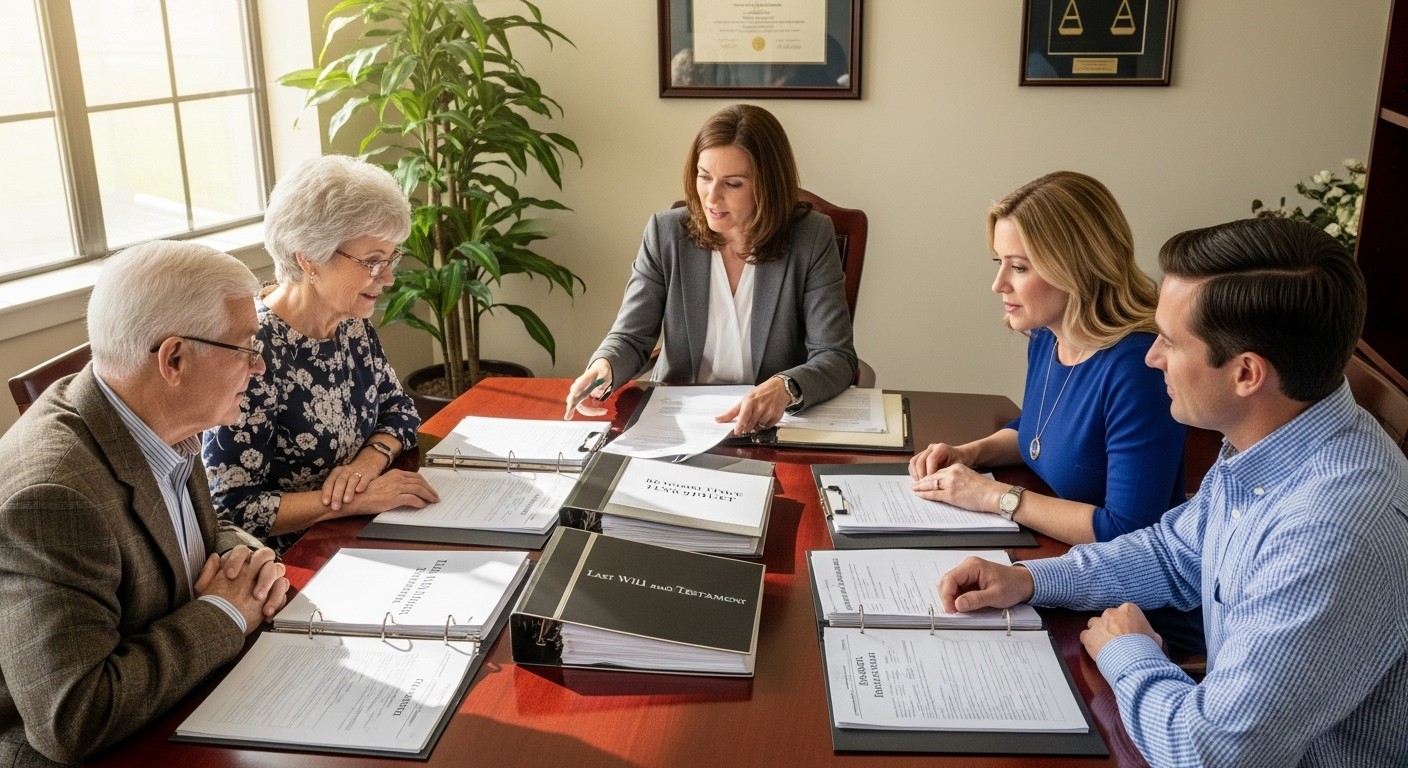
For US families, comprehensive estate planning isn’t just about wealth; it’s about peace of mind. It ensures your wishes are honored, your assets are distributed efficiently, and your loved ones are cared for, even when you’re no longer able to speak for yourself. This guide delves into the core components of a robust estate plan: wills, trusts, and strategies to avoid the often-complex probate process.
Wills vs. Trusts: Understanding the Fundamental Differences
One of the first questions many families ask is: “What are the fundamental differences between wills and trusts, and when is each document appropriate?” While both wills and trusts are legal instruments for distributing assets, their mechanics and implications differ significantly.
- Last Will and Testament: A will is a legal document that outlines how your assets should be distributed after your death. It also allows you to name guardians for minor children and appoint an executor to manage your estate. A will only takes effect upon your death and typically must go through probate.
- Trust: A trust is a legal arrangement where a “grantor” (you) transfers assets to a “trustee” (an individual or institution) to hold and manage for the benefit of “beneficiaries.” Trusts can be active during your lifetime (living trusts) or created upon your death (testamentary trusts). A key advantage is that assets held in a properly funded living trust generally bypass probate.
A will is appropriate for most individuals who want to specify asset distribution and name guardians. A trust is often more appropriate for those with significant assets, a desire to avoid probate, or specific conditions for asset distribution over time.
DIY Estate Planning: Risks and Requirements
The accessibility of information raises another critical question: “Can one create a legally binding will or trust without a lawyer, and are online will-making services reliable?” And importantly, “What are the potential pitfalls of ‘Do-It-Yourself’ online wills and trusts?”
While it’s technically possible to create estate planning documents without a lawyer using online services, it comes with significant risks. These services can be a starting point for very simple estates, but they often lack the nuance and personalized advice a qualified attorney provides. Estate laws vary by state and are complex. A mistake in drafting could render your documents invalid or lead to unintended consequences, costing your heirs more time and money in the long run.
Legal Requirements for a Valid Will
To be legally binding, a will must meet specific criteria. “What are the legal requirements for a valid will (age, mental soundness, witness requirements, notarization)?”
- Age: The testator (person making the will) must generally be at least 18 years old.
- Mental Soundness (Testamentary Capacity): The testator must be of sound mind, meaning they understand they are making a will, the nature of their property, and who their beneficiaries are.
- In Writing: The will must be a written document.
- Signed: The testator must sign the will.
- Witnesses: Most states require two witnesses, who are generally not beneficiaries of the will, to be present when the testator signs and then sign the will themselves.
- Notarization: While not typically required for a will itself, notarization is often used for a “self-proving affidavit” attached to the will. This affidavit allows the will to be admitted to probate without requiring the witnesses to testify in court, simplifying the process.

Understanding and Avoiding Probate
Probate is the legal process through which a will is proven valid, an executor is appointed, assets are gathered, debts paid, and property distributed. Many families seek to avoid it. “How does the probate process work, and is it always necessary even with a will?” and “What are the associated costs and timelines of the probate process, and do they vary by state?”
Even with a will, most estates typically go through probate. The will provides the court with instructions, but the court still oversees the process to ensure validity and proper execution. Probate can be time-consuming, expensive (often 3-7% of the estate’s value), and public. Costs and timelines vary significantly by state and the complexity of the estate. Minor estates might qualify for simplified probate procedures.
Probate Avoidance Strategies
“What strategies can be used to avoid probate (e.g., trusts, jointly held property, beneficiary designations)?”
- Revocable Living Trusts: “How do trusts help avoid probate and manage assets in the event of incapacitation?” Assets properly transferred into a living trust avoid probate because the trust, not the individual, legally owns the assets. If you become incapacitated, your chosen successor trustee can manage the trust’s assets without court intervention.
- Joint Tenancy with Right of Survivorship (JTWROS): Assets held in this manner automatically pass to the surviving owner upon one owner’s death, bypassing probate. This is common for real estate and bank accounts between spouses.
- Beneficiary Designations: Retirement accounts (401k, IRA), life insurance policies, and some bank accounts allow you to name beneficiaries. These assets pass directly to the named beneficiaries outside of probate.
- Payable-on-Death (POD) / Transfer-on-Death (TOD) Accounts: Similar to beneficiary designations, these allow bank accounts and investment accounts to pass directly to a named beneficiary.
Funding a Trust
“Which types of assets should be placed in a trust, and how does one properly fund it?”
Common assets placed in a trust include real estate, bank accounts, brokerage accounts, business interests, and valuable personal property. Funding a trust involves formally transferring ownership of these assets from your name to the name of the trust. This crucial step is often overlooked in DIY approaches and can negate the trust’s probate-avoidance benefits if not done correctly.
The Implications of Dying Without a Will (Intestacy)
“What are the implications of dying without a will (intestate succession)?” If you pass away without a valid will, you die “intestate.” In this scenario, state laws dictate how your assets are distributed, which may not align with your wishes. Typically, assets go to your closest relatives (spouse, children, parents), but the specific order varies by state. This process can be lengthy, costly, and may not provide for chosen individuals, such as partners, stepchildren, or charities.
Executor’s Duties and Beneficiaries’ Rights
“What are the executor’s duties and beneficiaries’ rights during the probate process?” The executor (or personal representative) is legally responsible for carrying out the terms of the will. Their duties typically include:
- Locating and securing assets.
- Notifying creditors and paying legitimate debts.
- Filing tax returns.
- Distributing remaining assets to beneficiaries according to the will or state law.
Beneficiaries have rights to information about the estate’s progress, to receive their inheritance as specified, and to challenge aspects of the will or probate process if they believe there are irregularities.
Beyond Wills and Trusts: Other Crucial Documents
Estate planning extends beyond wills and trusts to encompass managing your affairs during your lifetime. “Beyond wills and trusts, what other crucial estate planning documents should be considered (e.g., durable powers of attorney, advance health care directives, HIPAA authorizations)?”
- Durable Power of Attorney (DPOA): Appoints someone to make financial decisions on your behalf if you become incapacitated.
- Advance Health Care Directive (Living Will & Health Care Power of Attorney): Specifies your wishes for medical treatment and appoints a healthcare agent to make decisions if you cannot.
- HIPAA Authorization: Allows named individuals to access your protected health information, essential for your healthcare agent.
- Letter of Instruction: A non-legal document offering practical guidance to your executor/trustee (e.g., funeral wishes, list of accounts, digital asset instructions).

Special Considerations in Estate Planning
Estate Tax Planning
“How can estate tax planning strategies be implemented, especially in light of changing exemptions?” Federal estate tax currently applies to very large estates, with high exemption amounts (e.g., over $13 million per individual in 2025). However, these exemptions can change, and some states have their own estate or inheritance taxes with much lower thresholds. Strategies include making annual gifts, establishing irrevocable trusts, and charitable giving. Always consult with an estate planning attorney and tax advisor for up-to-date information and personalized strategies, as laws are constantly evolving.
Protecting Disabled Family Members
“How can one protect disabled family members within an estate plan?” For family members with special needs, a Special Needs Trust (SNT) is crucial. This type of trust allows assets to be held for their benefit without jeopardizing their eligibility for essential government benefits like Medicaid or Supplemental Security Income (SSI). An SNT needs to be carefully drafted by an attorney experienced in this area.
Resolving Disputes
“What is the process for resolving disputes over wills and trusts, and how are issues of undue influence or lack of testamentary capacity addressed?” Disputes (will contests) can arise from concerns about undue influence, lack of testamentary capacity, or improper execution. These are typically resolved through litigation in probate court. Evidence, such as medical records, witness testimonies, and prior versions of documents, is used to support or refute claims. Legal counsel is essential for anyone involved in such disputes.
Review and Update Your Plan Regularly
Finally, estate planning is not a one-time event. “How often should estate planning documents be reviewed and updated, especially after life changes?”
It’s recommended to review your estate plan every 3-5 years, or immediately following significant life events such as:
- Marriage, divorce, or remarriage.
- Birth or adoption of a child.
- Death of a beneficiary, executor, or trustee.
- Significant changes in assets or liabilities.
- Changes in tax laws.
- Relocation to a different state.
Secure Your Family’s Future Today
Comprehensive estate planning is a gift to your family, offering clarity and protection during difficult times. By understanding the roles of wills and trusts, the nuances of probate, and the importance of other vital documents, you can build a robust plan that reflects your unique wishes and safeguards your legacy. While online resources can provide general information, the complexity of estate law and the profound impact of these decisions necessitate professional guidance.
Consider consulting with an experienced estate planning attorney to ensure your documents are legally sound, reflect your current circumstances, and achieve your specific goals for your family’s future.
Disclaimer: This article is intended for informational purposes only and does not constitute legal, financial, or tax advice. Estate planning laws are complex and vary by state. You should consult with a qualified estate planning attorney, financial advisor, and/or tax professional for advice tailored to your specific situation.